
Clean energy projects that survive a procurement cycle.
Public bodies are not short of solar vendors. They are short of partners who can structure a project for GeM or tender, carry it through a multi-year approval cycle, and still be there to operate and report on it in year eight.
Why now
Energy is one of the largest recurring lines you actually control.
Most public bodies cannot change what they pay per unit. They can change how many units they buy, and from whom.
A recurring cost on a fixed budget
Pumping, street lighting and building loads consume a substantial share of an operating budget every single year, and that share grows every time tariffs move.
Capital committed elsewhere
The asset makes sense, the capital line has no room. RESCO and BOOT structures exist precisely for this, and are increasingly the default route rather than the exception.
Approval cycles run in years
A decision taken this year is a system commissioned two or three years later. Whatever target you are working to, the clock on it has already started.
Where the energy goes
Four places worth looking before anything else.
Public-sector consumption concentrates in a small number of asset types. Two of them are usually larger than anyone expects.
Water and pumping
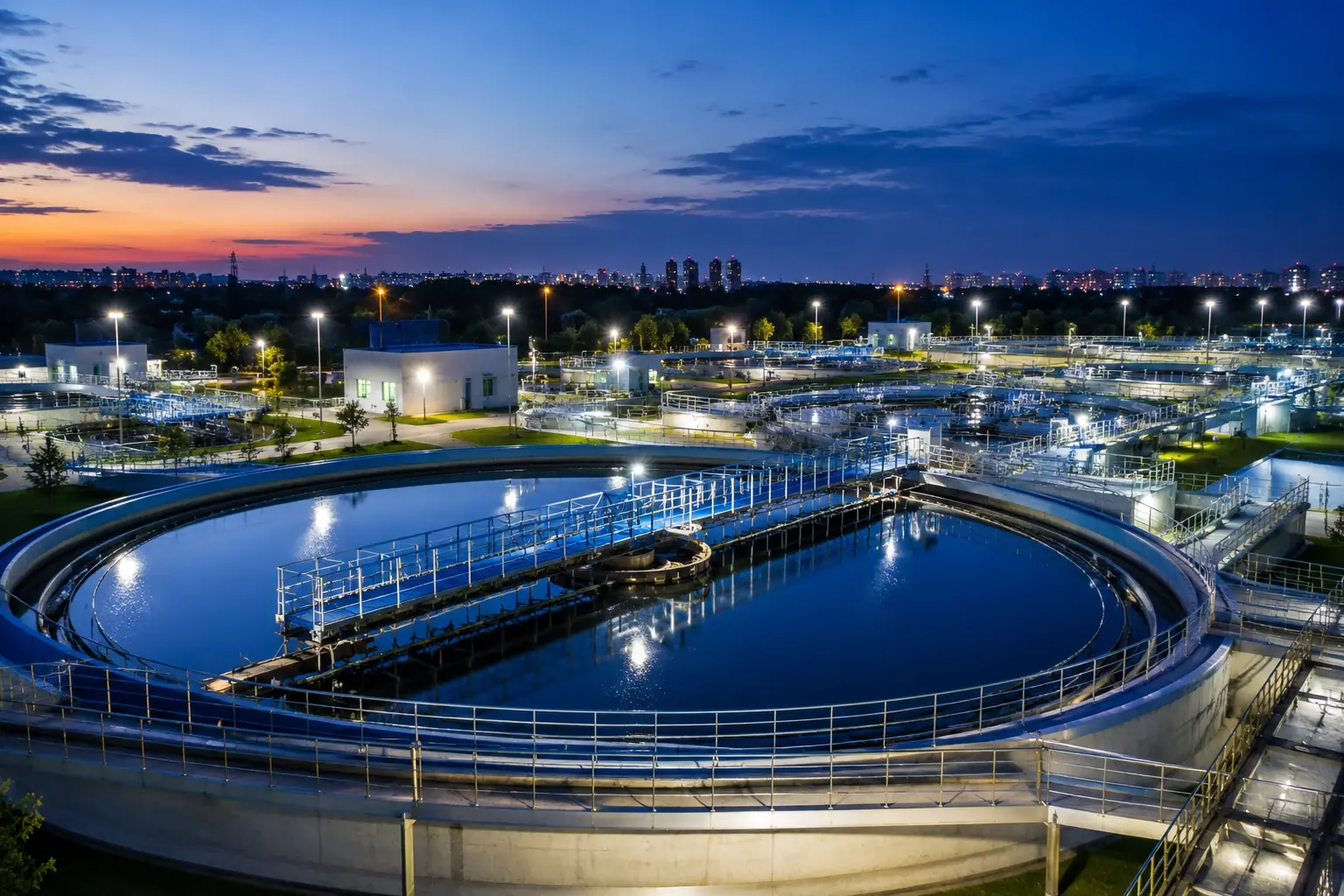
Pumping is often the single largest electricity consumer a local body operates, and it runs to a schedule that suits generation and storage unusually well.
Street lighting
Distributed, always on, and metered inconsistently. Control and measurement often deliver as much saving as new generation does.
Buildings and campuses
Offices, hospitals, schools and institutional campuses with large roof area and a predictable daytime load profile.
PSU plants and industrial assets
High connected load and continuity requirements, with existing infrastructure that has to be integrated rather than replaced.

Rooftop generation across a building portfolio
Public bodies rarely have one building. They have dozens, with different roofs, ages, loads and meters. Treating them as a portfolio rather than as separate tenders is where the economics change.
- Portfolio assessment first, so the strongest sites are phased ahead of the marginal ones.
- Structural condition assessed honestly, including roofs that should not carry an array yet.
- One monitoring and reporting layer across every site, not one portal per contract.
- Phasing that matches how budgets are actually sanctioned.
Delivery models
Three routes, and the honest trade-off on each.
The engineering is identical across all three. What changes is who funds the asset, who owns it, and who carries the risk if it underperforms.
You fund and own it
The department funds the system through its capital budget and owns the asset outright from commissioning.
- You pay
- Capital cost up front, then an O&M contract.
- Best when
- A capital head is available and sanctioned, and the site tenure is long.
We fund, you buy the units
We finance, build, own and operate the system, and you pay only for the energy actually generated, at an agreed tariff.
- You pay
- A per-unit tariff from an operating head, with no capital outlay.
- Best when
- Capital is unavailable and you want cost certainty without owning an asset.
We build, operate, then transfer
We build and operate the system for an agreed term, then transfer ownership of the asset to you at the end of it.
- You pay
- A service or energy charge during the term, then own the asset.
- Best when
- You want the asset eventually but cannot fund it now.
Working inside procurement
Built to be evaluated, not just delivered.
A public project is judged twice: once at award and once again years later by an auditor who was not in the room. We build the documentation for the second reading.
- GeM-compatible supply where the category and structure allow it.
- Technical and financial bid documentation prepared to the format asked for.
- Specifications written to be evaluated objectively rather than to fit one vendor.
- Performance reporting retained and traceable for the life of the contract.
- O&M obligations stated in the contract, not left to a goodwill arrangement.
Questions
What procurement teams ask first.
Can you supply through GeM?
Yes, where the category and the structure of the requirement allow it. Not every energy project maps cleanly onto a GeM category, particularly RESCO and BOOT arrangements with a long service term. We will tell you early which route fits rather than forcing the project into the wrong one.
We have no capital budget this year. What are our options?
RESCO and BOOT both exist for exactly this. The system is funded by us and paid for from an operating head, either per unit generated or as a service charge. It is the most common route we see for public bodies now.
Who maintains the system after commissioning?
We do, under contract. Under RESCO or BOOT that is our obligation because we own the asset. Under a capital purchase it is a separate O&M contract with defined response times. A handover with no maintenance obligation is how public solar assets end up underperforming three years later.
Our approval process takes years. Is that a problem?
No, but it changes how the project should be prepared. We build the technical case so it survives review by people who were not part of the original discussion, and we keep the assessment current if the timeline extends.
Can you work with our existing infrastructure and contractors?
Yes. Existing arrays, gensets, switchgear and metering are usually assets to integrate rather than replace. Where local contractors are already engaged for civil or electrical work, we scope around them.
Do you work outside Maharashtra?
Yes. We are based in Pune and work across India. Rules on net metering, open access and discom processes differ by state, so each site is mapped separately while the reporting stays consolidated.
Get in touch
Start with the assessment.
Tell us which assets you are looking at and how the project would need to be procured. We will come back with what is possible and which route fits.
Prefer to talk now? info@dvoltt.com · +91 75592 91724