

Cut the cost. Prove the carbon. Keep the line running.
Energy is one of the few large costs on an industrial P&L you can still do something about. We design, build and run the generation, storage and control that takes a plant off full grid and diesel dependence, with metered evidence your buyers and auditors will accept.
Why now
Three pressures arriving at the same time.
Most plants are dealing with all three, and treating them as three separate problems with three separate budgets. They are one problem with one system.
Cost you do not control
Tariffs climb, demand charges punish your peaks, and diesel is expensive insurance you hope never to use. None of it is within your control while you rent every unit you consume.
Continuity you cannot risk
An outage on a process line is not an inconvenience. It is scrap, downtime and a missed dispatch. Backup that leans on a diesel set is a cost centre carrying an emissions penalty as well.
Disclosure reaching your gate
CBAM applies at the EU border for exporters in covered sectors, and BRSR value-chain reporting is pushing large listed buyers to ask suppliers for verified numbers. Estimates do not survive that conversation.
A local note: plants in the Pune, Mumbai and Aurangabad industrial belts are also working under Maharashtra's push toward real-time emissions monitoring. If you operate across states, you are managing several rulebooks at once, which is an argument for one measurement layer rather than several.
What we build
Engineered against your load, not your roof area.
Three things decide whether an industrial energy project pays back: how it is sized, whether it protects production, and whether anyone can prove what it did.
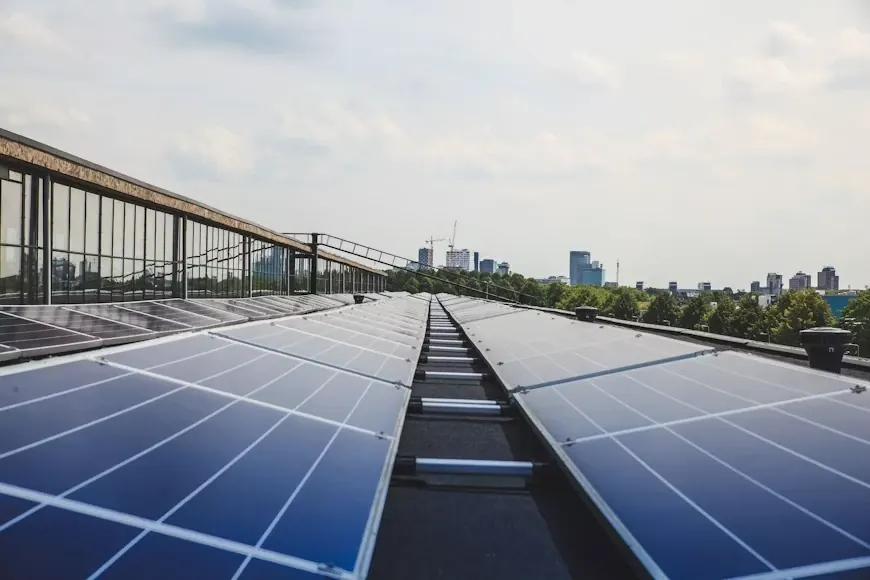
Generation sized to your consumption
Roof area is what you have. Your load curve is what matters. Sizing to the first and ignoring the second is how plants end up exporting power cheaply that they could have used themselves.
- Structural and shadow survey before the design is fixed, not after commissioning.
- Sized against your consumption profile so self-consumption is maximised.
- Net metering, open access and captive routes compared on landed cost per unit.
- String-level monitoring, so underperformance becomes a maintenance ticket.

Continuity for the line that cannot stop
Storage and microgrid control so a grid event does not become a production event, and so your peaks stop setting your bill.
- Peak shaving against contract demand and time-of-day windows, which is often where the money actually sits.
- Storage sized on your demand profile rather than on a catalogue.
- Critical loads prioritised automatically when supply is constrained.
- Diesel reduced to genuine last resort, or designed out entirely.
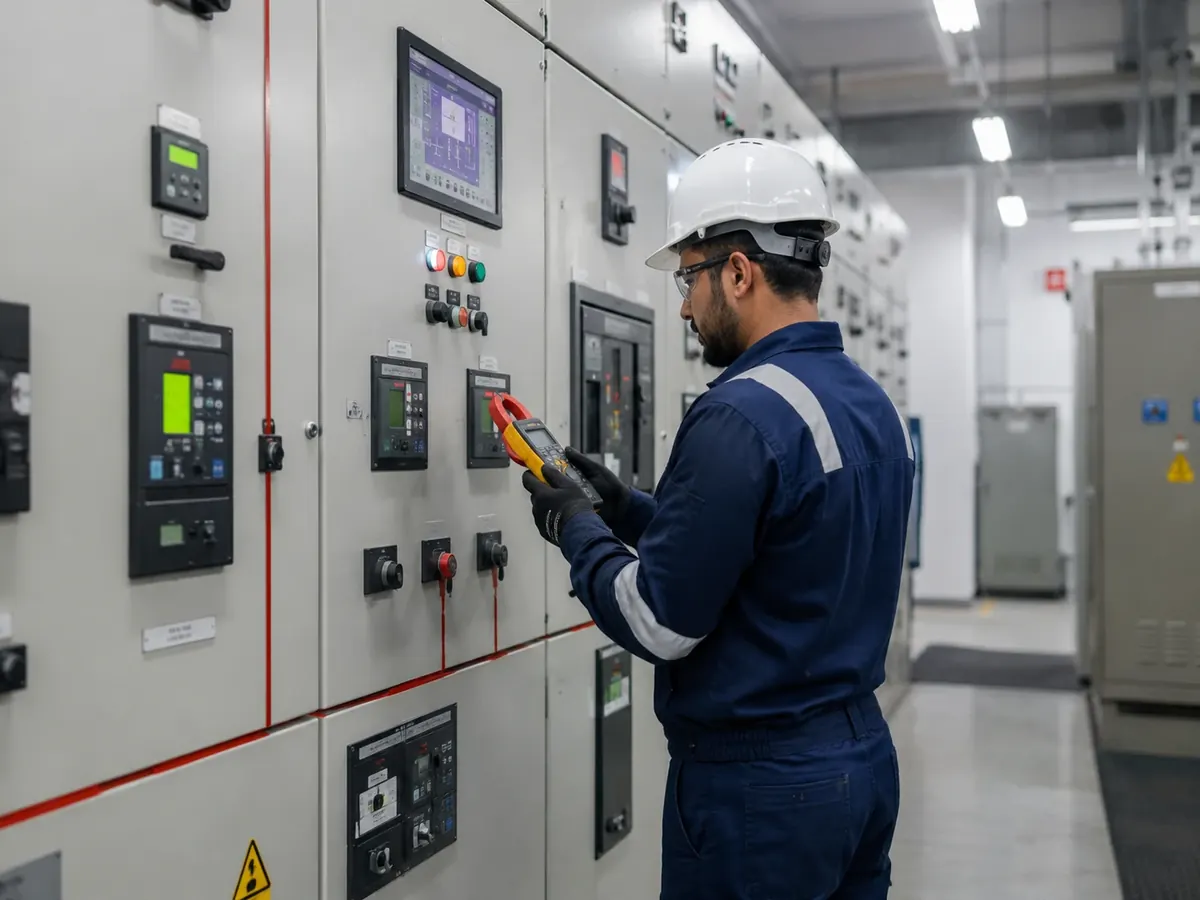
Evidence, not estimates
Metering at asset level and reporting built for disclosure rather than for a dashboard nobody opens.
- Sub-metering by line, utility and shift, so you know where consumption actually goes.
- Baseline established before any saving is claimed, so the number is defensible.
- Export-ready data for BRSR disclosure and CBAM reporting.
- Alerts on performance drift before it reaches a monthly bill.
Sectors
The load looks different in every plant.
What makes a project worth doing changes by sector. These are the patterns we design around most often.
Automotive
OEM supplier requirements now cascade to Tier-1 and Tier-2. Verified energy and emissions data is becoming a condition of supply, not a reporting chore.
Chemical
Continuous process, high connected load, multi-plant compliance. Peak management and continuity usually carry more value than headline generation.
Life sciences
Controlled environments and batch integrity mean an outage is a quality event, not just a cost event. Continuity is specified first.
Food and beverage
Cold chain and processing loads run around the clock, which makes tariff-aware dispatch and storage worth real money.
Sugar and agri-processing
Seasonal crushing loads and existing co-generation make integration the deciding factor, not installation.
Engineering and fabrication
Spiky, equipment-driven demand where contract demand charges are often the largest single controllable line on the bill.
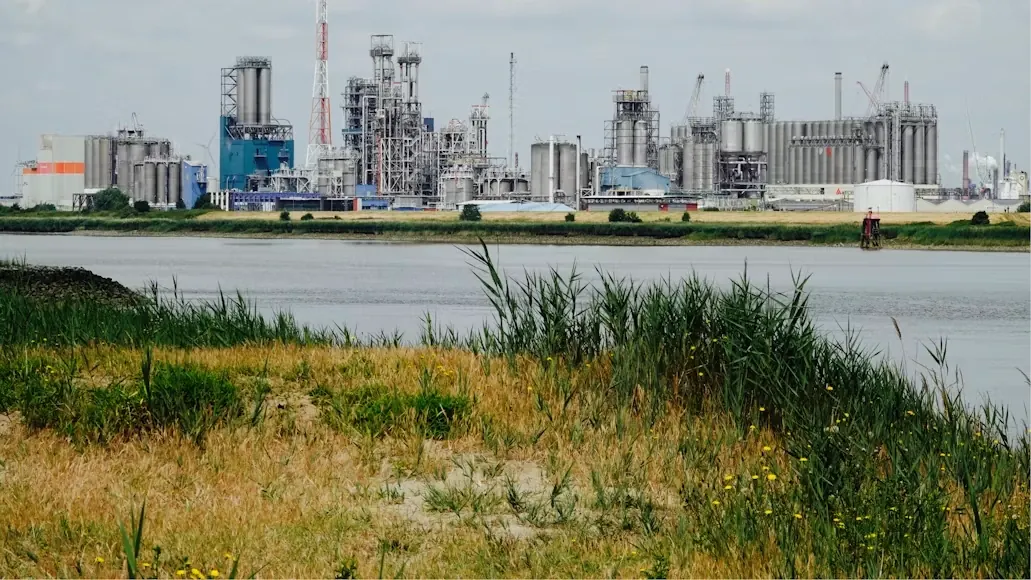
Asset-heavy sites with continuous load are where owned generation and storage compound fastest.
Questions
What plant teams ask first.
We already have a solar plant. Can you work with it?
Yes, and it is often the better starting point. An existing array with poor monitoring or a mismatch against your load is usually improvable without replacing anything. We assess what is there before proposing anything new.
Will installation interrupt production?
Rooftop work is largely external and can be sequenced around shifts and shutdowns. The tie-ins and switchgear work are the parts that need a planned window, and we agree those against your production calendar rather than ours.
What happens to our existing diesel gensets?
They usually stay, and run far less. A well-sized storage and microgrid design moves diesel from routine backup to genuine last resort. Removing sets entirely is a decision to take after a year of real operating data, not before.
We operate plants in several states. Does that complicate things?
It changes the approval path, not the engineering. Net metering rules, open access terms and discom processes vary by state, so we map each site separately and give you one reporting layer across all of them.
Will the data satisfy our customer's ESG audit?
That is what the metering layer is designed for. Asset-level measurement, a baseline established before any claim, and export-ready reporting. We would rather give you a smaller number you can defend than a larger one you cannot.
Get in touch
Start with your load curve.
Send us your consumption profile, your tariff and a sense of the site. We will come back with what is possible and what it is worth.
Prefer to talk now? info@dvoltt.com · +91 75592 91724